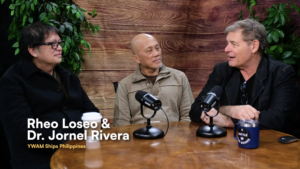
Faith Works is a limited podcast series with powerful, firsthand stories from global mission leaders, recorded live at MissionFest BC, Canada.
Does God still work in the world today?
When Faith Leaves the Classroom
For many young Christians in North America, faith can quietly become theoretical.
It lives in sermons, podcasts, classrooms, and worship services — important but often safely contained within familiar routines. At Pacific Life Bible College in Surrey, British Columbia, Matthew DeBlanc believes something changes when students step beyond those routines and put their faith into practice.
“Again and again,” he says, “stepping out of the ordinary seems to create an environment where there’s these encounters with the Lord.”
That conviction sits near the heart of Pacific Life’s ministry training and gap-year programs, where students of all ages — from recent high school graduates to mid-career adults sensing a new calling — are invited to immerse themselves in Scripture, discipleship, ministry training, and missions experiences.
One of the defining moments each year is a ministry trip.
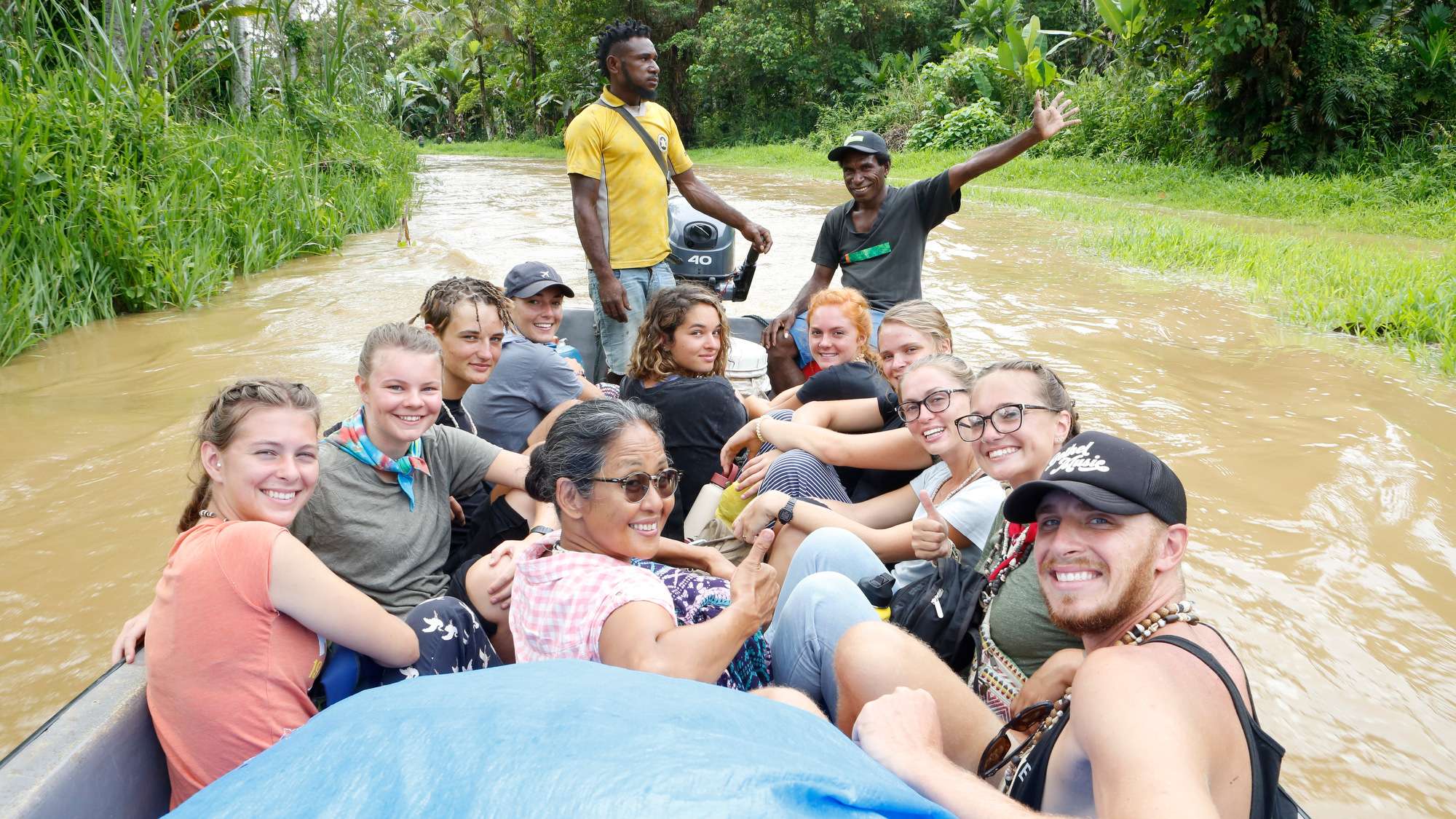
Recent teams have served in places like Scotland and Costa Rica. This year, students are preparing for Whitehorse in Canada’s Yukon Territory — a context Matthew describes as cross-cultural in its own unique way. The goal is not religious tourism. It is participation.
“We want to give students an opportunity to express the stuff they’ve learned,” he explains.
For one student named Jackie, that opportunity became deeply personal.
A relatively new believer, Jackie joined a ministry trip to Costa Rica where students adopted a mission statement centered around “earnestly desiring the gifts of the Spirit” while serving children and remote communities. Many of the students were uncertain what that phrase would actually mean in practice.
Then came a small outreach service in a rural village.
During prayer ministry, Jackie was asked to pray for a woman suffering from severe cataracts. Her vision was blurred badly enough that she could no longer read clearly. Healthcare access in many rural parts of Latin America remains limited compared to North America, where cataract surgery is relatively routine. According to the World Health Organization, cataracts remain one of the leading causes of blindness globally, particularly in lower-income regions where treatment access is uneven.
For Jackie, however, the moment was not primarily medical. It was spiritual.
He prayed. The team tested her eyesight afterward by asking her to read printed Spanish text.
She could read it.
For the woman, the experience became an encounter with healing and hope. But Matthew says something equally significant happened in Jackie himself.
“The thing we said we would do,” Matthew recalls him saying afterward, “it happened.”
That realization transformed the student’s understanding of Christianity from information into lived experience.
Matthew sees that pattern repeatedly. Students study theology, biblical interpretation, and ministry skills in the classroom, but it is often in uncomfortable, unfamiliar environments that those lessons become real. He compares it to the disciples returning to Jesus after being sent out in pairs through the villages of Galilee: amazed that what they had been taught actually worked in practice.
For Matthew, this tension also reflects a larger cultural challenge in the West.
North American culture, he argues, often dismisses or minimizes anything outside the purely material realm. Yet the New Testament consistently presents faith as something deeply supernatural — not detached from reality, but fully engaged with it.
“We’re invited into this supernatural journey,” he says. “It makes it thrilling.”
The deeper hope is that these moments do not remain overseas experiences filed away as missions-trip memories. Instead, students return home recognizing that healing, restoration, prayer, compassion, and spiritual hunger exist everywhere — including their own neighborhoods.
“You have to be there to see it,” Matthew says, “Not necessarily across an ocean – just present.”
So, do miracles still happen today? You be the judge.

For more episodes from the 2026 MissionFest BC
Faith Works Podcast Series, click the icon.