Faith Works is a limited podcast series with powerful, firsthand stories from global mission leaders, recorded live at MissionFest BC, Canada.
Does God still work in the world today?
Aid to the Isolated
The Philippines is one of the largest archipelagic nations on earth.
More than 7,600 islands are scattered across its waters, with over 2,000 inhabited by communities separated by geography, weather, poverty, and limited infrastructure. According to leaders at YWAM Ships Philippines, approximately 1,500 of those islands still lack adequate access to basic medical and dental services.
For YWAM Ships Philippines director Rheo Loseo, those realities are deeply personal.
“My desire,” he explains, “was to see the marginalized Filipino among the isolated communities in our country.”
The burden did not emerge overnight. Years of observing healthcare inequality, remote island poverty, and the uneven distribution of services slowly formed what Loseo describes as a calling rooted not merely in humanitarian concern, but in the compassion of God Himself.
“If it’s just me,” he says, “I would not be able to have a heart with that depth of love for our fellow Filipino people.”
A Different Model of Missions
Unlike many traditional humanitarian models that rely heavily on foreign-led operations, YWAM Ships Philippines has become known for its unusually collaborative and localized approach.
Their partnerships now include the Philippine Coast Guard, the Armed Forces of the Philippines, local governments, physicians, dentists, churches, businesses, and private donors across the country.
Loseo believes the scale of need is simply too large for any single organization to address alone.
“It has to be a collective heart,” he says.
That philosophy aligns closely with the Filipino cultural value of bayanihan — a communal spirit of cooperation and mutual support often associated with neighbors literally carrying one another’s burdens together.
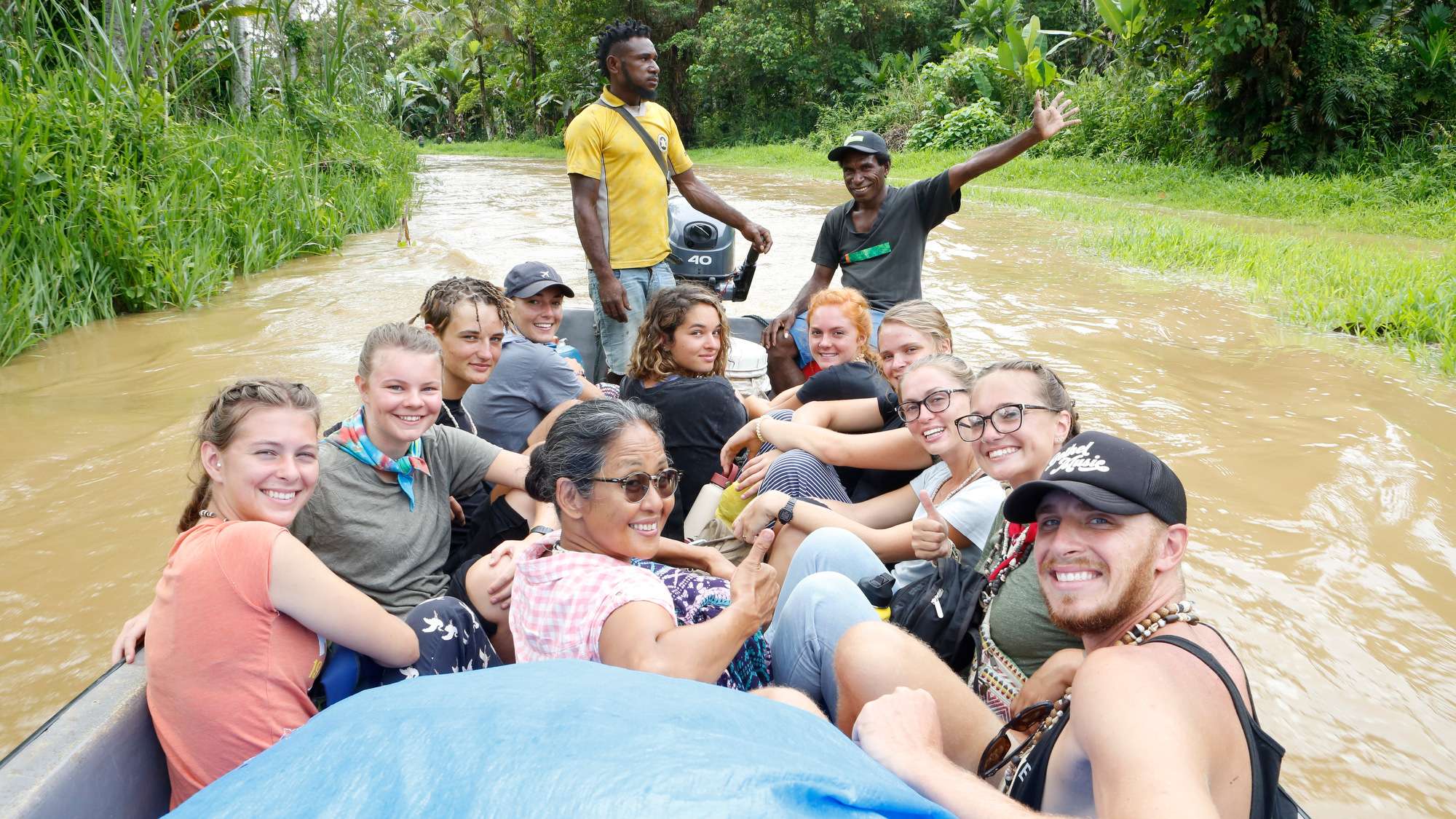
Rather than functioning independently from local systems, YWAM Ships Philippines intentionally works through relationship and partnership. During the COVID-19 pandemic, when international travel and many ministries slowed dramatically, Loseo began conducting outreach missions using Philippine Coast Guard vessels to access isolated communities in places like Oriental Mindoro.
What followed, he says, was a remarkable sequence of partnerships and open doors.
“One after another,” he recalls, “the Lord opened many doors.”
Those partnerships now support medical missions, dental outreaches, disaster response, community development initiatives, and ongoing humanitarian operations across coastal and island regions.
“There’s Nothing More I Can Do”
For Dr. Jornel Rivera, the realities of those outreaches are often emotionally complex.
A retired emergency room physician with 25 years of experience, Rivera now helps recruit medical volunteers, organize medications, and coordinate healthcare teams serving aboard outreach missions.
But unlike the structured environment of a modern emergency department, many island outreaches confront medical conditions that are already far advanced by the time patients are seen.
“The majority of things I see,” Rivera explains, “there’s absolutely nothing you can do permanently for them.”
Cancer diagnoses. Untreated chronic illnesses. Severe infections. Conditions that might have been manageable in major urban hospitals often progress unchecked for years in isolated communities with limited access to specialists or diagnostic care.
Even medications, Rivera says, are sometimes only temporary relief.
“You still have to give them hope.”
For him, that hope ultimately extends beyond medicine itself.
“It’s not about us,” he says. “It’s not about our medicine. It’s about what God can offer them.”
That perspective has also created unexpected opportunities for spiritual conversations and prayer. Rivera says he has yet to encounter a patient unwilling to receive prayer when offered compassionately by a doctor or nurse.
“These are people that normally probably would never get a chance for someone to pray for them.”
The Woman with Thyroid Cancer
One encounter, however, continues to affect Rivera deeply.
During an outreach, a woman arrived suffering from what Rivera immediately recognized as advanced thyroid cancer. The mass in her throat was large and visibly pronounced.
From his medical experience, he believed there was little realistic treatment available for her condition in that environment.
“I remember looking at her and saying, ‘I’m sorry, there’s not much I can do.’”
But as he prayed for her, Rivera says he felt prompted to pray specifically for physical healing — not merely comfort or peace.
Together with Rheo Loseo and another pastor, they laid hands on the woman and prayed.
What happened next still unsettles him.
“I felt my fingers get hot,” Rivera recalls. “And I could feel the tumor shrinking.”
At first, he says, he doubted what he was experiencing.
But when they opened their eyes, the visible swelling had dramatically reduced. The woman herself reported that she could swallow more easily almost immediately.
Rivera says he repeatedly re-examined her neck in disbelief.
Even recounting the story later, he speaks cautiously — not triumphantly — emphasizing that his own medical ability had already reached its limit long before that moment occurred.
“When you come to a point where you’re looking at that person and say, ‘There’s nothing more I can do for you’… oh, by the way, here’s God.”
“And that’s usually when He shows up.”
Compassion in Word and Deed
Stories like these sit at the intersection of medicine, faith, and humanitarian service — a space YWAM Ships Philippines intentionally inhabits.
Their approach reflects a broader understanding of Christian mission that combines practical aid with spiritual care, not treating them as competing priorities but as interconnected expressions of compassion.
Medical missions provide treatment, medications, surgeries, dental care, and referrals. But they also create moments of human dignity, prayer, listening, and emotional support for people who are often geographically and socially isolated.
For Loseo, the deeper goal is not organizational recognition.
“The hope,” he says, “is not about us.”
Instead, he points repeatedly toward the partnerships, communities, churches, and ordinary volunteers participating together in the work.
“The need is so great in our country,” he says, “that many should join.”
And across thousands of islands where access remains difficult and healthcare uneven, that invitation continues to grow.

For more episodes from the 2026 MissionFest BC
Faith Works Podcast Series, click the icon.